
Research about why play-based learning works
For children roughly ages 2-6, the strongest evidence suggests that play-based learning is the most developmentally appropriate way for learning to happen. The best-supported form of play.based learning is intentional, guided, or scaffolded play: adults set a learning goal, prepare materials and learning space thoughtfully, preserve the child’s agency, and then guide with prompts, questions, modeling, and emotional support instead of taking over. Evidence shows that guided play outperforms direct instruction on some early math and executive-function outcomes. Other studies show gains in vocabulary, spontaneous attention to numbers, and preschool mathematics. Neuroscience helps explain the reasons behind the good outcomes - curiosity supports attention and memory, play exercises executive-function systems, and emotionally safe relationships make learning easier for the developing brain (Skene et al., 2022; Yogman et al., 2018; Zosh et al., 2018).
Curiosity, dopamine, and memory
When play-based learning is done well, it gives children a reason to care. In other words, it’s meaningful for the children. That matters because learning is not only about exposure to information; it is also about whether the brain treats that information as worth noticing and worth keeping. Research on curiosity suggests that when people become genuinely interested in finding something out, reward- and motivation-related systems become more active and help memory systems do their job. Simply, curiosity tells the brain, “This matters—pay attention.” That is why a child who is trying to solve a playful problem often remembers more than a child who is only complying with an assignment (van Schijndel & Jansen, 2025; Ziv et al., 2026), and why children often sustain attention longer in playful investigations than in heavily adult-directed tasks.The learning feels internally meaningful rather than externally imposed.
Learning to learn is a critical future skill
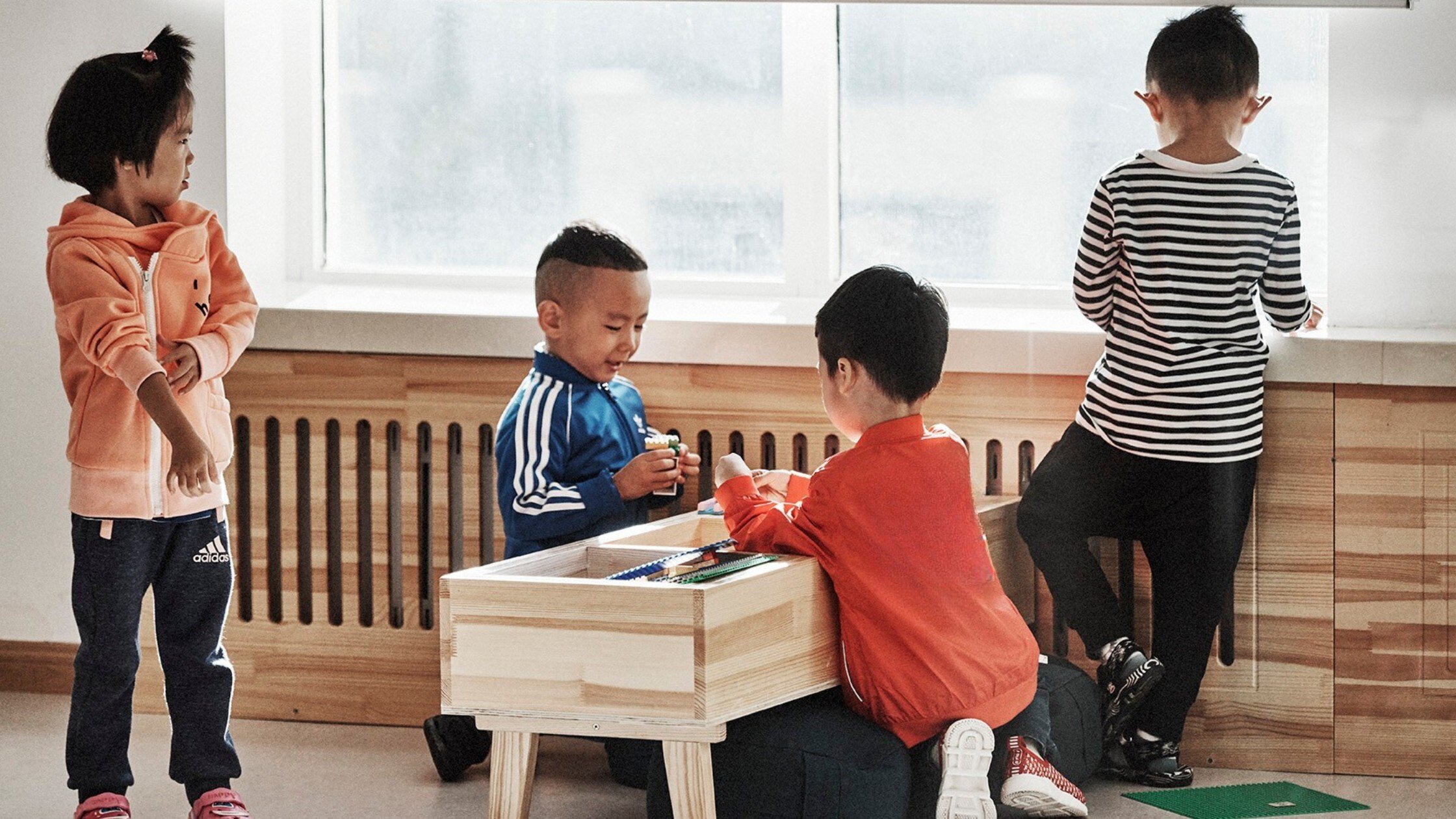
Play also strengthens the “learning skills” children need in order to learn anything else. These are foundational capacities for lifelong learning. Executive function includes working memory, inhibitory control, and cognitive flexibility, and it depends heavily on developing prefrontal systems. Young children practice these skills constantly in mature play. In pretend play, they need to stay in role, follow the logic of the story, hold shared rules in mind, and resist acting on every impulse. In games with rules, they must remember turns, stop themselves from cheating or blurting, and shift strategies when the game changes. In scaffolded play, adults can increase the level of challenge just enough to keep children thinking without tipping them into frustration. Observational studies also find that stronger pretend-play skills are closely tied to stronger self-regulation in real settings. In other words, good play-based learning does not only teach content. It helps children become the kind of learners who can focus, persist, negotiate, and adapt (Skene et al., 2022; Rosas et al., 2019; Veraksa et al., 2024; Bredikyte & Brandisauskiene, 2023; Brandisauskiene et al., 2025).
What good play-based learning looks like in practice
The phrase play-based learning is often misunderstood because it gets used for two very different things: rich, intentional pedagogy on one hand, and undirected activity on the other. The evidence favors the first. Across the best syntheses, good play-based learning has three non-negotiables: a clear learning goal, child agency, and responsive adult guidance. The adult’s job is not to lecture, but also not to disappear. In high-quality play-based learning environments, adults remain intellectually present and pedagogically intentional even when children appear to be “just playing.” It is to prepare a meaningful context, notice what the child is doing, and stretch the learning with just enough support. That may mean adding a prompt, asking an open question, modeling one move, or naming an idea at the right moment. It also means protecting the child’s ownership of the activity. Once the adult takes over the storyline, the task ceases to be guided play and starts becoming disguised instruction (Skene et al., 2022; Zosh et al., 2018).
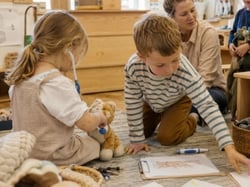 A strong classroom or home example is a pretend doctor or veterinary clinic. A teacher or parent can set out clipboards, labels, toy thermometers, waiting-room signs, and story prompts. The learning goals might include vocabulary, narrative language, sequencing, and self-regulation. Children choose roles and direct the scenario. The adult does not script every line. Instead, they might ask, “What does the patient need first?” or “How will you remember who is next?” Those questions keep the child in charge while pulling attention toward planning, language, and working memory. This is the “right way”: intentional, but still genuinely playful (Yogman et al., 2018; Skene et al., 2022).
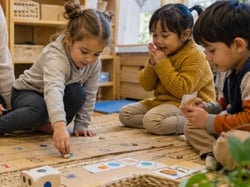 A second example is a simple board game or movement game with rules. A number path game, a step-and-clap pattern game, or a turn-taking card game can look light and playful while exercising serious learning machinery. The academic goal may be counting, patterning, magnitude, or vocabulary. The cognitive goal is inhibitory control and flexible attention. Adults can support by naming strategies, keeping the pace warm and low-pressure, and gradually increasing challenge. Official learning-through-play guidance specifically highlights the value of board games for strengthening math concepts while also building social competence, and recent intervention evidence shows that role play and games with rules can produce lasting executive-function gains (UNICEF, 2018; Veraksa et al., 2024).
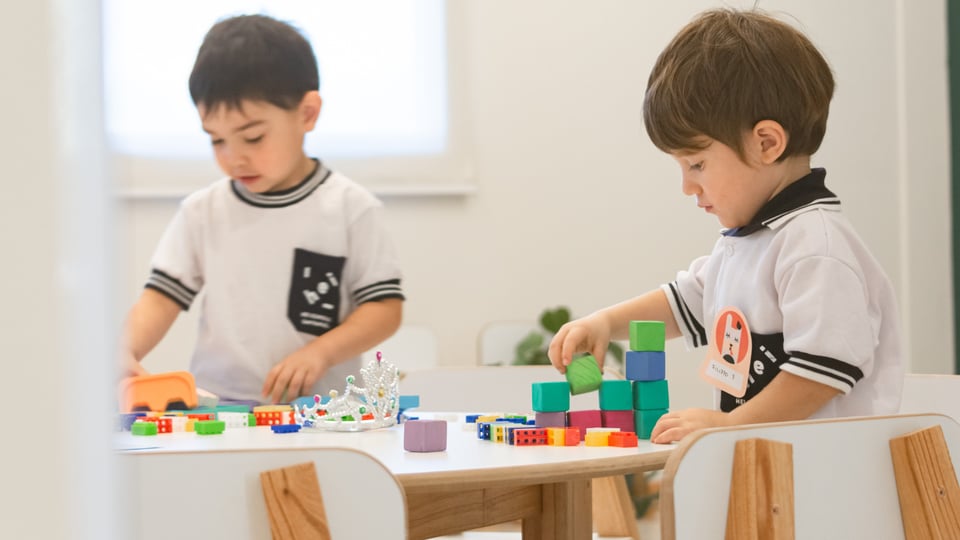
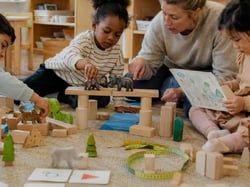 A third example is a block-and-story world: building a city, bridge, zoo, or farm. Here the adult can quietly embed goals in spatial language, geometry, cause-and-effect reasoning, or early engineering. Instead of telling children exactly what to build, the adult might add picture prompts, maps, measuring tapes, or a challenge such as, “Can the bridge hold two animals?” That kind of setup matters. Research shows that guided play helps children learn shape and spatial ideas better than free play alone, and thoughtfully prompted parent-child play can sharpen children’s spontaneous attention to number in informal settings. The learning is strongest when the environment invites investigation and the adult helps children notice important features without turning the activity into a worksheet with toys (Fisher et al., 2013; Braham et al., 2018; NAEYC, 2022).
How can parents tell whether play-based learning is real, or just a marketing slogan?
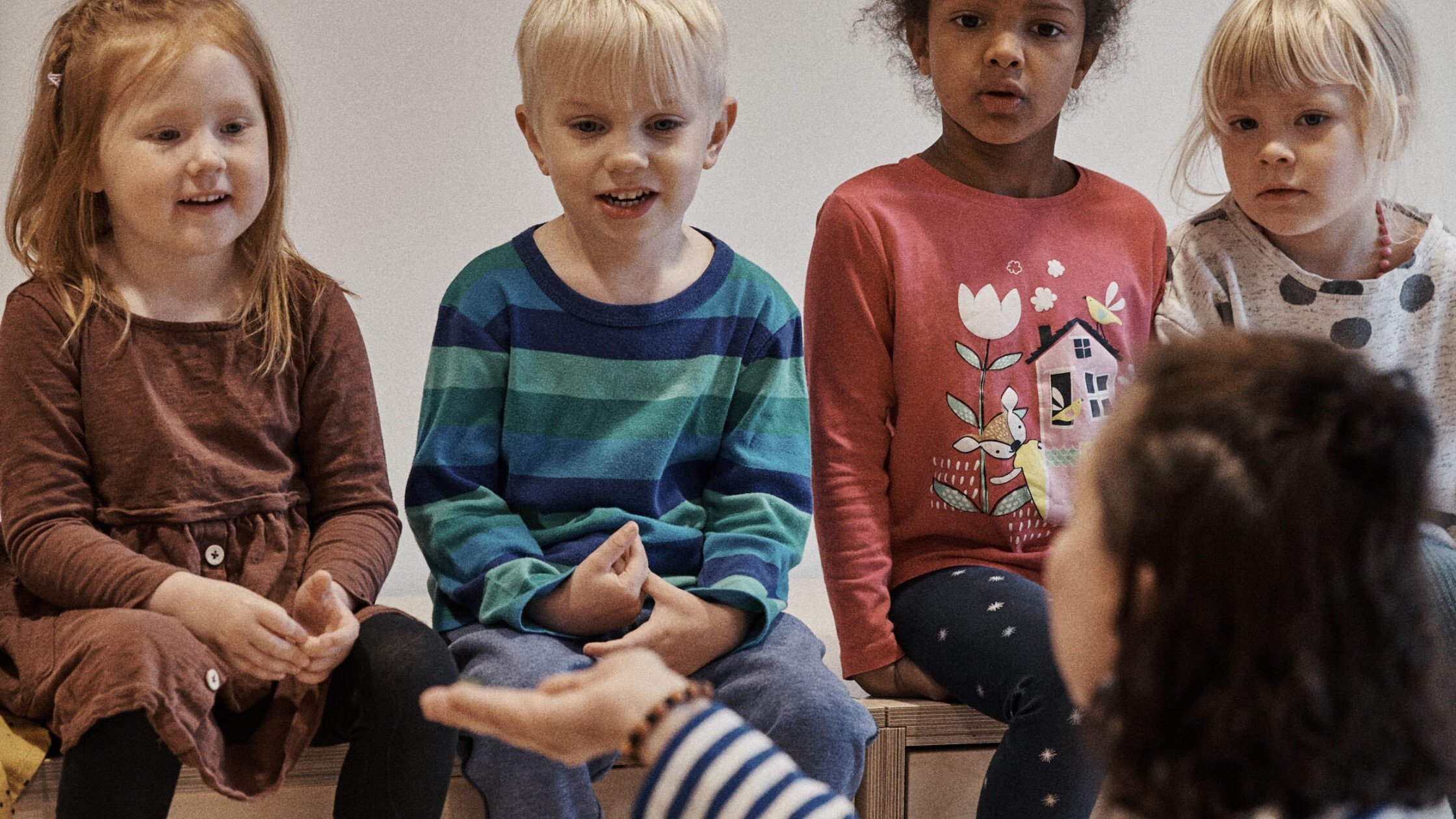
As play-based learning has become more popular, the term is sometimes used very loosely. In some settings, it simply means children are given toys, free time, or colorful activities without clear developmental intention. But research-based play pedagogy looks very different. In high-quality play-based learning, adults are actively observing, guiding, extending language, supporting social interaction, and intentionally designing environments around developmental goals. The learning may look playful on the surface, but it is carefully structured underneath.
One useful question for parents is not simply, “Are children playing?” but rather, “What are children learning through play, and how are adults supporting that learning?” In strong play-based environments, teachers can usually explain the purpose behind the activity: how a pretend restaurant supports language and self-regulation, how a block-building challenge develops spatial reasoning, or how a game with rules strengthens working memory and inhibitory control. The pedagogy is visible in the interactions, not only in the materials.
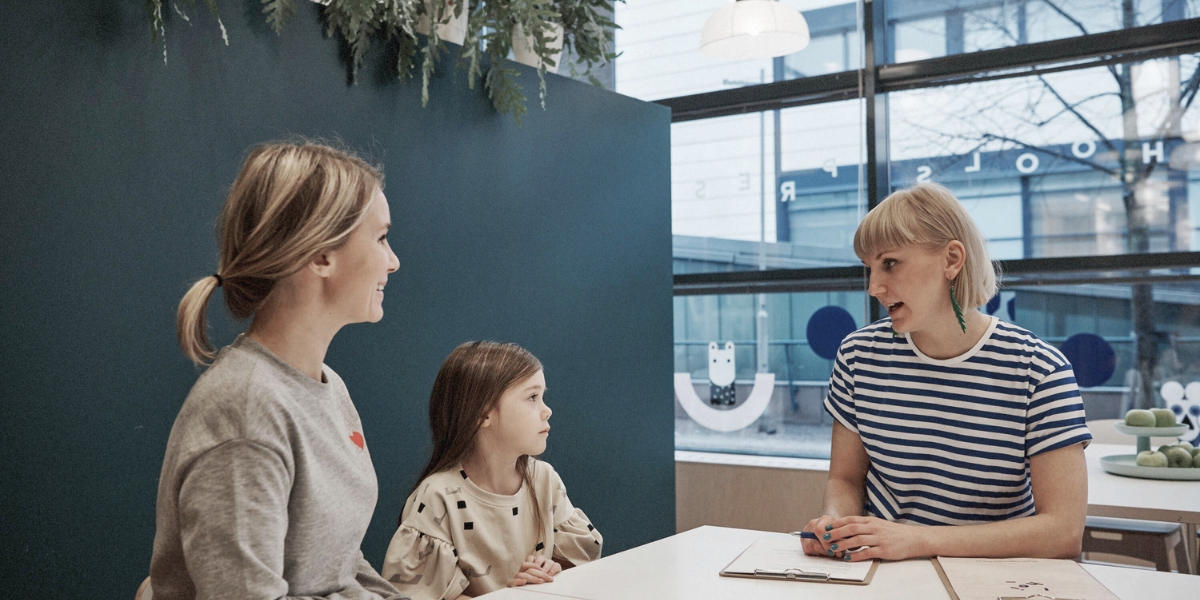
Parents can also look for signs of sustained child engagement, rich conversations, collaborative problem-solving, and emotionally secure relationships. Research consistently shows that young children learn best when they feel psychologically safe, socially connected, and actively involved in meaning-making. In practice, this means children should not spend most of the day passively listening, filling worksheets, or moving mechanically between activities. Effective play-based learning combines child agency with intentional adult guidance.
 This is also the foundation of the HEI Schools Early Years pedagogy. The model is built around guided, purposeful play in which teachers prepare rich learning environments, support children’s curiosity through thoughtfully designed themes and learning experiences, and integrate social-emotional, cognitive, and language development into everyday interactions and activities.
 The HEI Schools® Curriculum is designed around clear developmental goals and structured pedagogical intentions that guide teachers’ planning, observation, and interactions with children. Teachers intentionally design environments, projects, routines, and play invitations around specific learning objectives related to language, executive function, early mathematics, collaboration, creativity, motor skills, and emotional development. The difference is that these goals are pursued through active, meaningful participation rather than through passive instruction alone.
In practice, this means teachers continuously observe children’s interests, developmental readiness, and emerging questions, and then extend learning through inquiry-based interactions. A teacher may introduce new vocabulary during dramatic play, encourage prediction and reasoning during block construction, or support emotional regulation during collaborative problem-solving. The child remains an active participant in the learning process, while the teacher maintains a clear pedagogical intention and developmental direction. For teachers being able to do this, proper training on play-based learning is needed. HEI Schools trains all teachers and emphasizes and supports their own professional development.
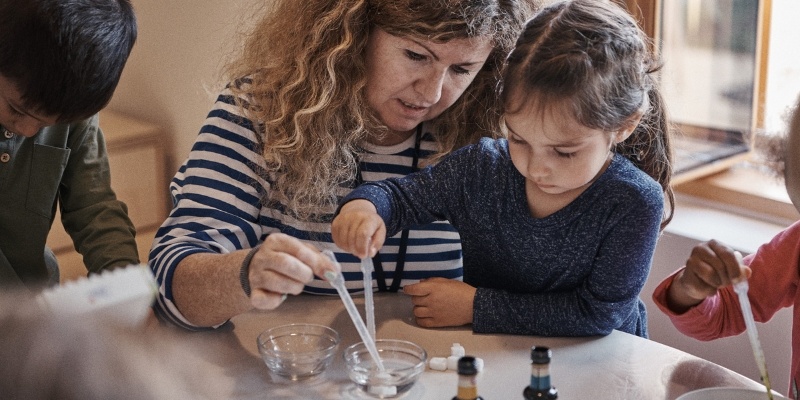
This balance between intentional teaching and child agency is central to genuine play-based learning. Without intentionality, play can become disconnected from developmental goals. Without child participation and ownership, learning risks becoming adult-controlled instruction disguised as play. The HEI Schools approach combines both: clear educational purpose together with emotionally meaningful, socially interactive, and intrinsically motivating experiences that align with how young children naturally learn and develop.
Conclusion
Play-based learning is optimal when it is intentional, child-active, emotionally safe, and well-scaffolded. In that form, play-based learning aligns unusually well with the developing brain: it recruits curiosity, supports memory, exercises executive function, builds language through social interaction, and protects the joy and security that make learning possible. That is why the practical goal for adults is not to choose between play and learning. It is to build learning experiences that are playful enough to respect how young children naturally learn, and intentional enough to systematically support their cognitive, social, emotional, and language development. (Skene et al., 2022; Yogman et al., 2018; Zosh et al., 2018; Størksen et al., 2023).
Reference and source:
Braham, E. J., Libertus, M. E., & McCrink, K. (2018). Children’s spontaneous focus on number before and after guided parent-child interactions in a children’s museum. Developmental Psychology, 54(8), 1492–1498. DOI: 10.1037/dev0000534.
Fisher, K. R., Hirsh-Pasek, K., Newcombe, N., & Golinkoff, R. M. (2013). Taking shape: Supporting preschoolers’ acquisition of geometric knowledge through guided play. Child Development, 84(6), 1872–1878.
Gruber, M. J., Gelman, B. D., & Ranganath, C. (2014). States of curiosity modulate hippocampus-dependent learning via the dopaminergic circuit. Neuron, 84(2), 486–496. DOI: 10.1016/j.neuron.2014.08.060.
Gruber, M. J., & Ranganath, C. (2019). How curiosity enhances hippocampus-dependent memory: The PACE framework. Trends in Cognitive Sciences, 23(12), 1014–1025. DOI: 10.1016/j.tics.2019.10.003.
Jirout, J. J., Evans, N. S., & Son, L. K. (2024). Curiosity in children across ages and contexts. Nature Reviews Psychology, 3, 622–635. DOI: 10.1038/s44159-024-00346-5.
Skene, K., O’Farrelly, C. M., Byrne, E. M., Kirby, N., Stevens, E. C., & Ramchandani, P. G. (2022). Can guidance during play enhance children’s learning and development in educational contexts? A systematic review and meta-analysis. Child Development, 93(4), 1162–1180. DOI: 10.1111/cdev.13730.
Størksen, I., Rege, M., Solli, I. F., ten Braak, D., Lenes, R., & Geldhof, G. J. (2023). The playful learning curriculum: A randomized controlled trial. Early Childhood Research Quarterly, 64, 36–46. DOI: 10.1016/j.ecresq.2023.01.015.
Toub, T. S., Hassinger-Das, B., Nesbitt, K. T., Ilgaz, H., Weisberg, D. S., Hirsh-Pasek, K., Golinkoff, R. M., Nicolopoulou, A., & Dickinson, D. K. (2018). The language of play: Developing preschool vocabulary through play following shared book-reading. Early Childhood Research Quarterly, 45, 1–17. DOI: 10.1016/j.ecresq.2018.01.010.
van Schijndel, T. J. P., & Jansen, B. R. J. (2025). Integrating lines of research on children’s curiosity-driven learning. Journal of Experimental Child Psychology, 252, 106168. DOI: 10.1016/j.jecp.2024.106168.
Veraksa, A. N., Veresov, N., Sukhikh, V. L., Gavrilova, M. N., & Plotnikova, V. A. (2024). Play to foster children’s executive function skills: Exploring short- and long-term effects of digital and traditional types of play. International Journal of Early Childhood, 56, 687–709. DOI: 10.1007/s13158-023-00377-8.
Yogman, M., Garner, A., Hutchinson, J., Hirsh-Pasek, K., Golinkoff, R. M., et al. (2018). The power of play: A pediatric role in enhancing development in young children. Pediatrics, 142(3), e20182058.
Ziv, M. S., Ellwood-Lowe, M. E., Botdorf, M., Nishio, M., Bonawitz, E., & Mackey, A. P. (2026). Neural responses to state curiosity in young children. Developmental Cognitive Neuroscience, 101687. DOI: 10.1016/j.dcn.2026.101687.
Zosh, J. M., Hirsh-Pasek, K., Hopkins, E. J., Jensen, H., Liu, C., Neale, D., Solis, S. L., et al. (2018). Accessing the inaccessible: Redefining play as a spectrum. Frontiers in Psychology, 9, 1124. DOI: 10.3389/fpsyg.2018.01124.
.png?width=352&name=HEI%20Schools%20expands%20into%20the%20UAE%20(1600x600%20px).png)