

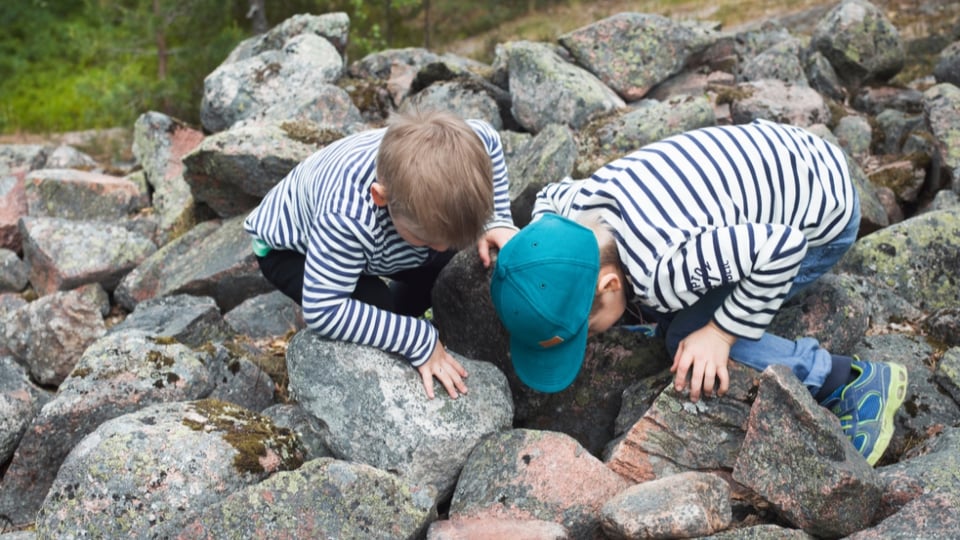
Nature-Rich Playgrounds Could Be the Key to Healthier Kids!
In our increasingly sanitized, urbanized world, childhood often means smooth pavements, plastic toys, and carefully monitored play zones. But what if that sanitization is depriving children of something essential — not just outdoor fun, but the microscopic building blocks of health? A groundbreaking study from Finland suggests that restoring a bit of wildness to playgrounds might do much more than spark joy: it could boost children’s immune systems, diversify their microbiome, and reconnect them with the natural world.
The Finnish Experiment: Forest Floors in Kindergarten Yards
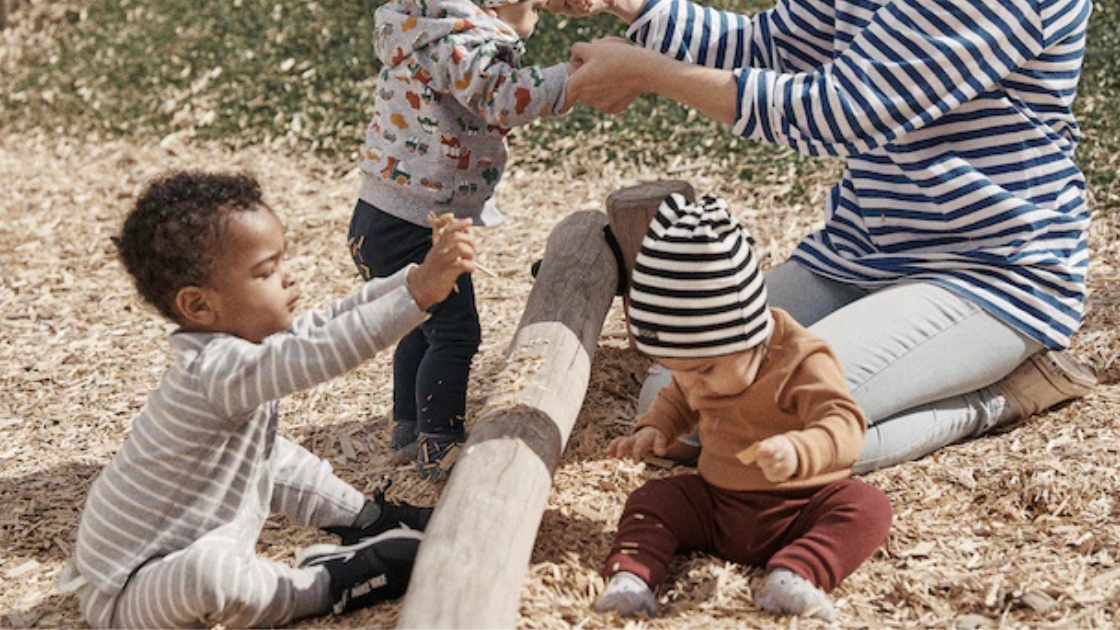
At nurseries across Finland, entire yards were “rewilded”: asphalt, gravel, and sterile sand were replaced with real forest soil, moss, leaf litter, compost beds, wild plants, and even edible gardens. Children aged 3–5 were encouraged to get muddy, dig, forage, and play — not just for fun, but as an intentional way to bring nature into their daily lives.
The results were striking. Within weeks, researchers observed increased microbial diversity on children’s skin and in their guts; lowered levels of potentially harmful bacteria; and signs of improved immune regulation (more regulatory T-cells, better resistance markers). In short: nature became medicine.
 Why This Matters?
We often think of biodiversity in terms of birds, insects, or plants — but the natural world teems with invisible life too: microbes in soil, fungi, bacteria, microbes in the air. Our immune systems developed in constant dialogue with the microbial world. Yet modern urban living often cuts off that contact.
The Finnish experiments remind us that reconnecting with microbial diversity may be critical for healthy immune development, potentially reducing allergies, autoimmune conditions, and other lifestyle-related illnesses. Not to mention that multitude of studies show the clear connection between mental health benefits and spending time in the nature.
Bringing It into Prechools
 For HEI Schools — where holistic education, sustainability, and connection with the environment are embraced— this research offers further proof and a blueprint for the ideal school yard. Imagine preschool yards turned into mini ecosystems: compost corners, soil-based sandpits, patches of moss or native plants, planters with vegetables or berries, “bug-hunt” zones, and regular free play in soil under adult supervision.
Such spaces are natural classrooms: children learn about ecology by experiencing it; they build immunity by touching, smelling, breathing nature; they grow respect and curiosity for living systems. Teachers become facilitators of ecological immersion, not just academic guides. The real nature would also allow us to take the sustainability talk into a concretia, what does it mean when we say we want to preserve nature? What happens when we recycle food waste and compost it? What is the purpose of insects like bees? Why littering nature is so bad?
Do you know?
At HEI Schools, we train educators to create meaningful outdoor learning experiences that support children’s curiosity, independence, and responsibility throughout the school day. Children are encouraged to explore nature through their own interests while learning to make and own their choices.
Discover our outdoor pedagogy by booking a meeting to preview our curriculum.
Parents can also support outdoor learning at home with our free parent handbook, inspired by the Finnish approach to raising confident and resilient children. Sign up here.
Challenges & Solutions: Balance Between Nature, Safety and Parents’ Expectations
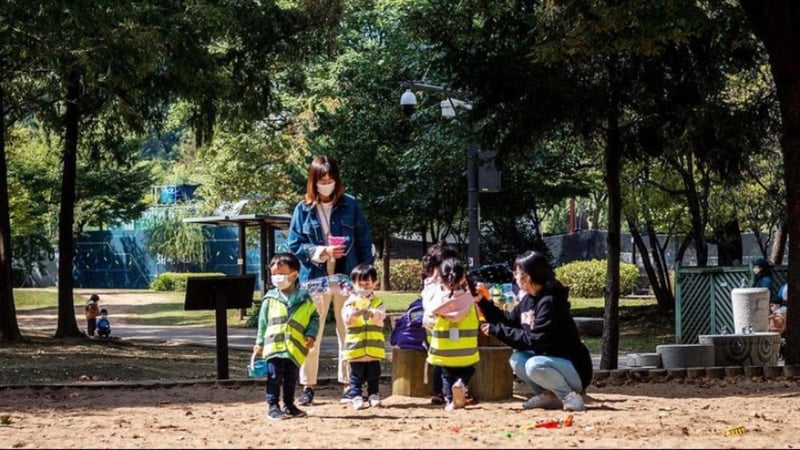
In reality all this is harder to come by as many preschools are located in cities where natural environments don’t exists, unless they are purposely built. In many countries the air quality can also pose challenges for outdoor time. The cost of land is also getting more expensive in many parts of the world, a large yard can be a significant cost item in the investment budget. And last but not least, cultural norms and parent’s expectations also influence how children spend time outdoors and what do they do there. In many cultures, getting dirty is not accepted and that already puts a limitation how outdoor play is viewed. Also, no one wants to risk serious infections, parasites, or unsafe play.
But the Finnish model shows that with thoughtful design —clean soil sourcing, proper hygiene policies (tetanus shots, hand-washing) and composting plant-based materials — the benefits can outweigh the challenges and perceived risks. The Finnish model transformed former car parks and gravel yards into biodiverse play areas. That means even schools in dense cities (or small urban campuses) could adopt similar designs — with compost beds, moss patches, native plants, soil-based sandpits — making rewilding feasible beyond rural or suburban contexts.
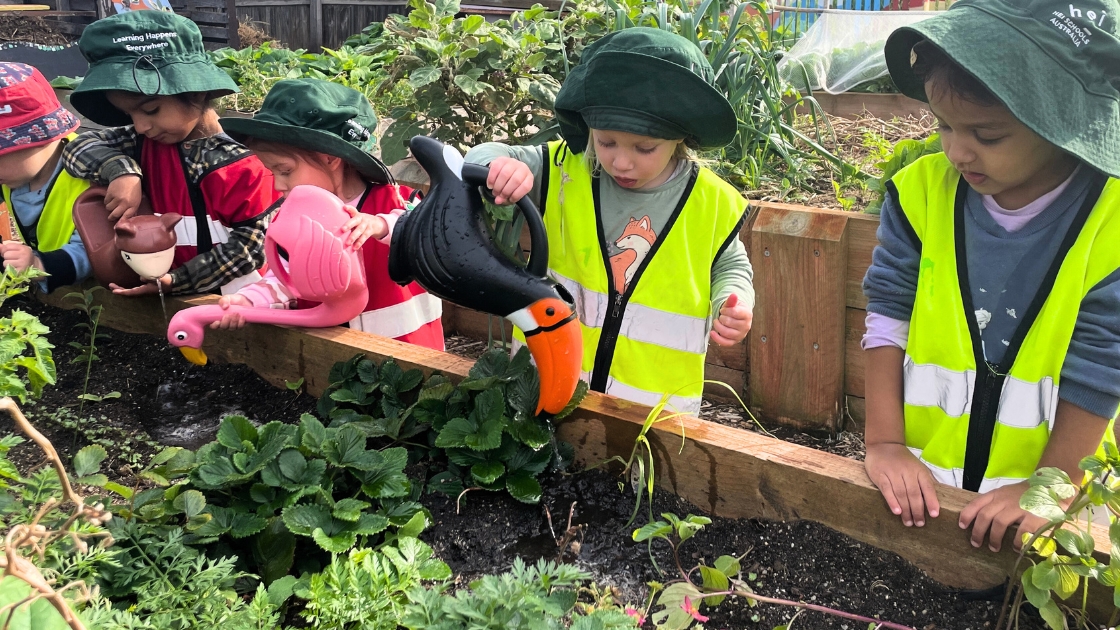 Preschools could also organize field trips to close by nature areas, farms or large parks. Many schools already have their own gardening with plant boxes, could those be expanded even further so that children could literally get their hands dirty when planting even a larger selection of plants. And for those schools which are located in the more rural areas, exposure to nature can become a great selling point!
Interested in implementing outdoor pedagogy at your school? Explore more with our educational solutions for you
 We would like to invite you to take a look at our Toolkit Curriculum, which is one of our educational solutions that encompasses all the outdoor learning mentioned above into one complete and implementable curriculum. The Toolkit curriculum comprises all the lesson plans, activities, and additional resources that can be readily used by teachers at your school(s).
Reseach behind this article:
The Guardian (2025). How a radical experiment to bring a forest into a preschool transformed children’s health. https://www.theguardian.com/environment/2025/oct/29/soil-sandpit-children-dirty-biodiversity-finnish-nurseries-research-microbes-bacteria-aoe
University of Helsinki. Boosting children's immune system through biodiversity. https://www.helsinki.fi/en/faculty-biological-and-environmental-sciences/news/forest-based-yard-improved-immune-system-daycare-children-only-month
Harvard’s Center on the Developing Child also emphasizes the role of natural, active play in healthy brain development. https://developingchild.harvard.edu/
Harvard’s School of Public Health highlights how nature exposure improves mental and physical wellbeing. https://www.hsph.harvard.edu/news/hsph-in-the-news/why-nature-is-good-for-your-health/